









Butterfly
About Butterflies
Teachers
Groups
Classes & Events

Butterfly School

More classroom activities

Fact-fiction book

Use creativity and imagination in arriving at a fictional trait that a butterfly might possess. Assign or allow students to pick their favorite butterfly. Have them write three interesting facts about their particular butterfly. Each student should use their imaginations to create an unusual human trait that butterflies might possess.these are known as "Little Known Facts," which are NOT really facts at all. This allows for the discussion about anthropomorphism, giving human traits and feelings to animals. Include an illustration at the bottom of the page. Gather all the pictures together for a class book. Adapted with permission from Norma O'Toole, Ritenour School District and presenter at the 2002 Interface Conference.

Insect anatomy

Purchase or gather samples of dead insects. Carolina Biological has several species available. Allow students to study the unique qualities of each insects, and find any similarities between those available for observation. Have the students create their own classification system of the samples. Adapted from the "Bugs, Bugs, Bugs" session held at NSTA 2002.

Instant pictures/instant nature

Older students can snap instant pictures of the schoolyard, or nearby park. These photographs can be used to teach other classes about the biodiversity in the neighborhood. Close-ups of tree bark, grass, petals, brick walls, sidewalks can lead to an interesting presentation about the patterns found in nature or made by man. Adapted from the Polaroid Education Program "Imagine a Green Tomorrow."

Insect songs

Many songs and adaptations exist on the Internet, teaching children about various species of invertebrates. One such song is as follows:

Head, Thorax, Abdomen (sung to the tune of "Mary Had a Little Lamb")
Head, thorax, abdomen,
Abdomen,
Abdomen,
Head, thorax, abdomen,
That's an insect.

Every insect has six legs,
has six legs,
has six legs,
Every insect has six legs,
That's an insect.

Design your own insect

Ask each student (or small group of students) to focus on a habitat type they find particularly interesting. Encourage them to read about that habitat. Once they have done some research, ask them to use their imaginations to create an insect that might live in that habitat. Ask them to draw their insect and write a story about it. Tell them to be sure to include descriptions of any special adaptations their insects have, which allow them to live in their challenging environment.

An even more challenging alternative to this exercise is to have your students create an imaginary habitat and then create an imaginary insect to live in that habitat.

Insect scavenger hunt

Your students do not have to actually collect insects in order to do an insect scavenger hunt! Instead, they can collect (or identify) things that look like insects, things insects have left behind (such as frass or empty cocoons), things insects may eat, or places insects might live. Given the amazing diversity of insects and all the different things they eat and places they live, almost anything a student collects can be related to an insect. Students can even listen for insects on their scavenger hunt. Have the students do a "show and tell" presentation while they explain to the class why their item(s) are related to insects. If the students actually collect insects or insect eggs, be sure to return them to their environment as soon as "show and tell" is over.

Write about it

After a visit to The Sophia M. Sachs Butterfly House, have your students sit down and write a poem about something they saw or learned at the Butterfly House.

Try tongue twisters or title down poems. Add artwork. Write jokes about the insects we have in the Exhibit Hall. Create a folk tale about why butterflies are in different colors, or why the Madagascar Hissing Cockroaches are so big. Can the insect's name be done in creative lettering, like small or LARGE?

Haiku could be one form of poetry to use. It needs to have three lines of five, seven, and five syllables; emphasis is syllabic, not rhyming.

Fluttering insects
Colorful, quiet, six legs
Moths and butterflies

Cinquains also count syllables and are written in five lines.
Line one= two syllables or two words
Line two= description of title in four syllables or four words
Line three= description of action in six syllables or six words
Line four= description of feeling in eight syllables or eight words
Line five= another word for title in two syllables or two words

Cockroach
Madagascar
Soft hissing when frightened
Big or little, brown and molting
insect

Ants are fabulous.
Never stand in their way.
They have important things to do.
So move your feet!

Insects in the news big book

Your class can continue learning about insects all year. Encourage your students to look through magazines and newspapers and collect any articles relating to insects. Have them bring their articles into the classroom, and collect them in a class book. This activity helps teach students about insects and their effect on our lives, as well as the process of science and the importance of different ecosystems all over the world.

Color-as-you-go

Click here to download a Color-As-You-Go, another version of a scavenger hunt your child or children may use during their visit to the Butterfly House. Please understand that due to the nature of changing exhibits, not all pieces may be available for viewing during any given time.

Play the insect alphabet game

Go through the alphabet with your class and try to name a kind of insect or a part of an insect for every letter of the alphabet. If necessary, use the Xerxes Blue butterfly for the letter "x." Another option exists in this phrase, borrowed with permission from Norma O'Toole, Ritenour School District. "X Y Z, let it be, we all need biodiversity."

Study butterfly scales

Send a request on school letterhead for a small set of butterflies to:

The Sophia M. Sachs Butterfly House
15193 Olive Boulevard
Chesterfield, MO 63017

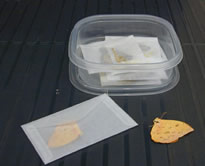
Every attempt will be made to send you five, good condition butterflies collected from our Tropical Conservatory after they have died. The fee will be the cost of mailing and will be mailed to you. We cannot guarantee the condition of the butterflies once they arrive.

Begin the three-part scale study by observing the wing of the butterfly with the unaided eye. Have students draw what they see. Distribute magnifying lenses, and draw for a second time what is seen. For the third part, life a few scales off the wing with a piece of tape. Draw the different shapes. Decide if different parts of the wing have different types of scales, like birds who have different feathers for different reasons.

Educator kits

Teachers in the St. Louis metropolitan area can borrow a kit consisting of various mounted insects, posters, or videos. These mounts would be for display only, not scale study. For more information, click here.

Back to classroom activity listing